Vertical plant sites
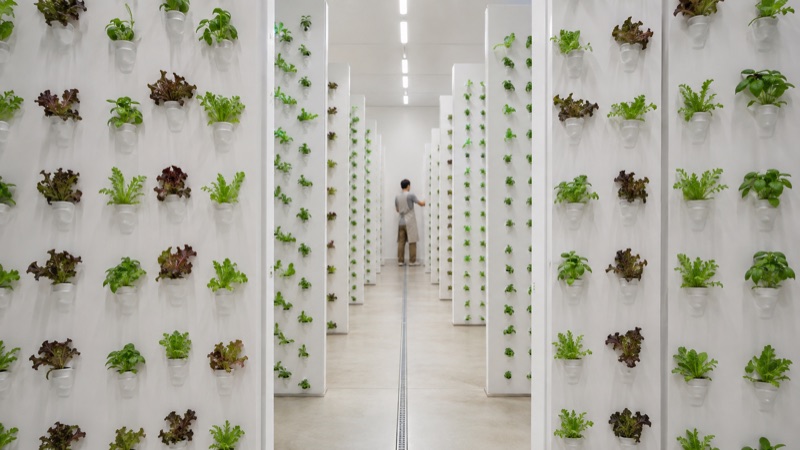
Instead of rows on the ground, plants grow in vertical walls, which is how a modular structure holds thousands of plant sites in a footprint the size of a large garage. Crops move through stages, from seed pod to transplant to harvest, so the wall is never all-or-nothing. Staggered plantings mean harvest comes continuously, week after week, rather than in one seasonal glut.
Walls of plants, floor to ceiling, growing in a room that never has a bad day.
A closed water loop
Water recirculates through the system, carrying nutrients to the roots and returning for another pass. Closed recirculating systems use up to 90 percent less water than open-field growing, an industry figure for controlled environment agriculture. Nothing runs off, and every drop is measured.
A climate that is managed for the plants
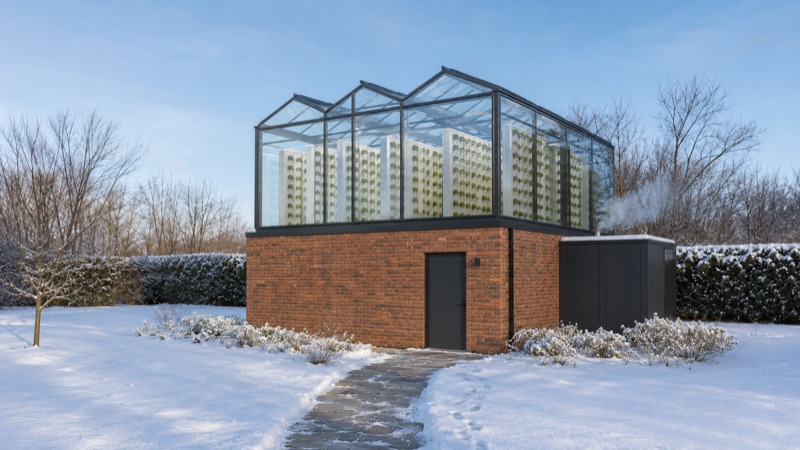
Temperature, humidity, light cycles, and nutrients are actively managed and remotely monitored by One Season, 24/7. That is what removes weather, season, and geography from the equation, and it is why no agricultural expertise is needed on site. If something drifts, the team sees it before the plants do.
What grows well
Leafy greens like romaine, kale, and chard. Herbs like basil, cilantro, mint, and parsley. Microgreens, mushrooms, and specialty crops. Growers choose the mix with their table, menu, or community in mind, and can change it planting by planting.
The daily routine
Plant, harvest, keep the space clean. The routines are simple enough that volunteers, students, and kitchen staff learn them in days, which is exactly the point: the complexity lives in the system, not in the job.