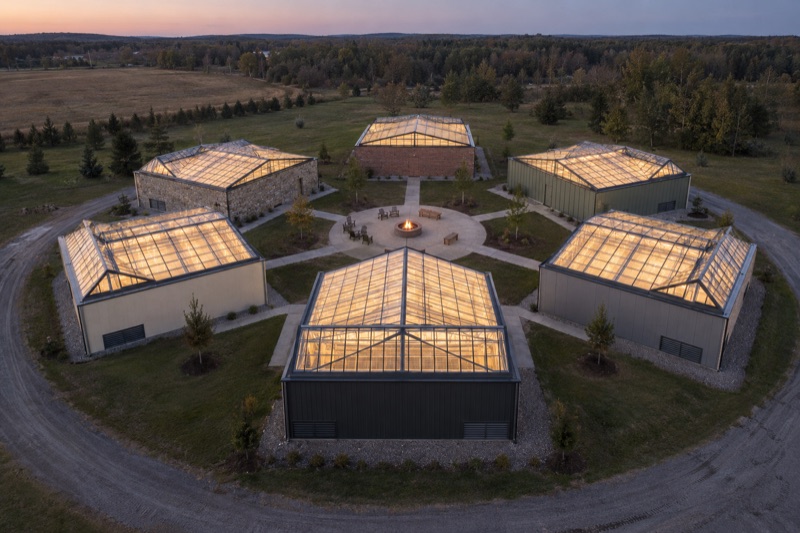
Infrastructure, not a garden
When people hear "local food," they picture a garden: seasonal, charming, and small. A garden is a hobby with a yield. Infrastructure is a commitment with a schedule. One Season buildings are designed to the second definition.
That distinction changes everything downstream. A garden asks what can be grown here. Infrastructure asks what a community eats every week, and how much of it can be produced within walking distance. The answer becomes a specification: square footage, growing levels, climate zones, harvest cadence.
It also changes who the building answers to. A garden serves whoever tends it. Infrastructure serves everyone who plugs into it: the school kitchen, the grocery cooler, the family two blocks away.
Treat fresh food the way you treat power, water, or internet.
Not a greenhouse
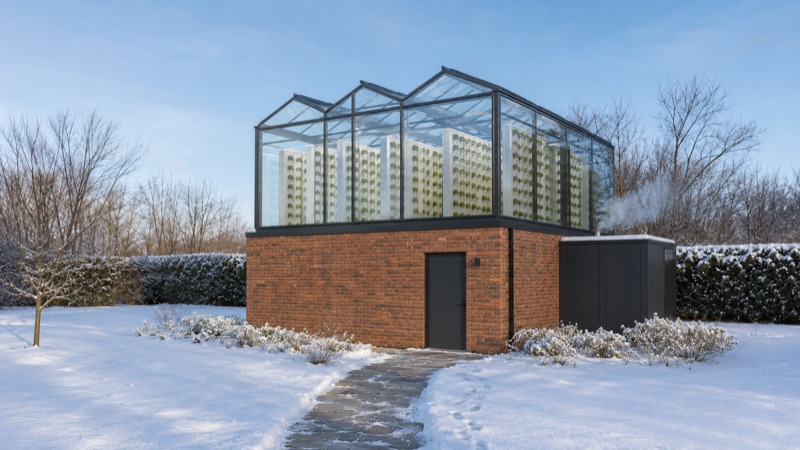
A greenhouse is a roof for a season. It extends the calendar; it does not replace it. One Season structures pair a conditioned growing core with an optional clear Venlo roof, and hold a steady climate twelve months a year, in Duluth or in Phoenix.
The difference shows up in the numbers. A greenhouse yields when the sun cooperates. A conditioned vertical system yields on a calendar, which is what a kitchen, a grocer, or a hospital actually plans around.
It also shows up on the street. These are civic buildings: brick, wood, and stone at the base, glass above, meant to sit beside a library without apologizing.
Owned like equipment, not built like a project
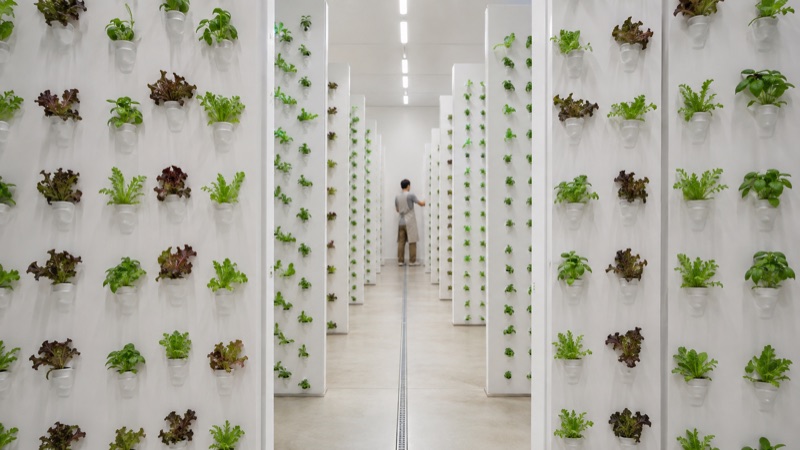
Construction projects are one-off: designed once, priced once, argued about for years. Equipment is modular: specified, delivered, commissioned, serviced. One Season buildings belong to the second category. The growing systems, climate plant, and envelope arrive as repeatable modules.
Ownership follows the same logic. Nobody commissions a feasibility study for a generator; they size it, buy it, and maintain it. Local food capacity can work the same way: a known cost per pound of weekly production, a service contract, a replacement cycle.
That is the quiet shift this piece argues for. Not more urgency about food miles, but a different mental category. Fresh food is not a cause. It is a utility that has been missing its infrastructure.