What the roof option actually is
The core One Season structure is a controlled growing environment run ventilation-first: filtered outside air does the conditioning whenever it is cooler and drier than the room, with the mechanical plant as the backstop. Light, climate, water, and nutrients are managed and remotely monitored, which is what makes 365-day harvests possible in any weather, in any state.
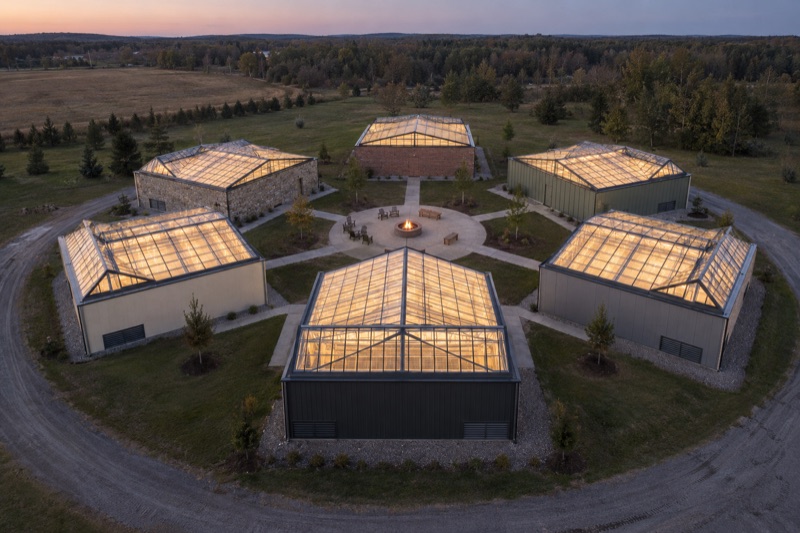
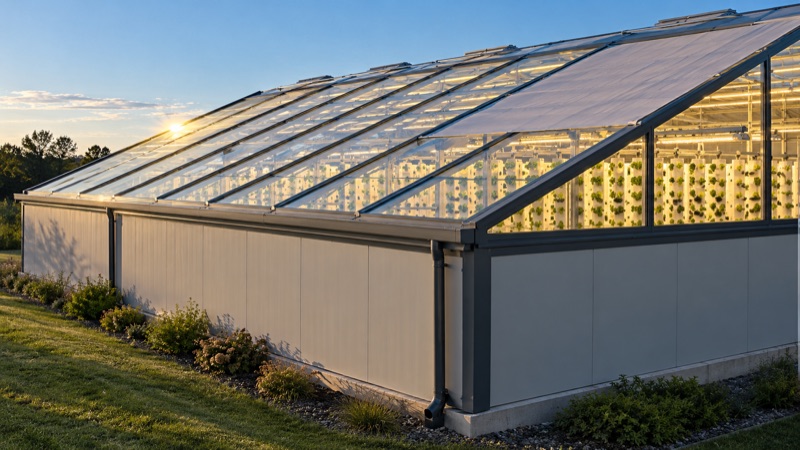
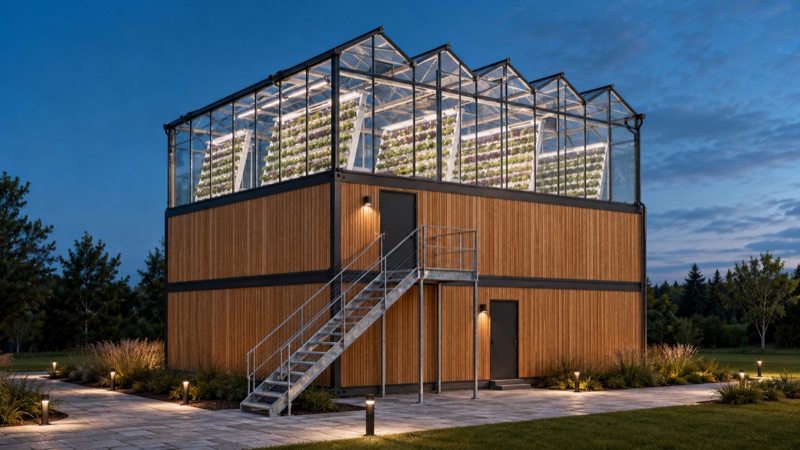
The greenhouse roof is an optional glazed level available on select configurations. It brings natural light into the top floor and turns it into a bright, plant-filled space that people can see into and gather around. Think of it as the difference between a building's mechanical floor and its rooftop terrace: same building, different job.
So it is a greenhouse? It is not, and the difference matters.
When operators choose it
- Hospitality showpieces. A hotel or restaurant that wants guests to see the growing, not just taste it. Paired with an outdoor kitchen or dining area, the glazed level becomes part of the property's architecture.
- Community visibility. A school or community project that wants the building to invite people in. A glowing glass roof says something a metal wall cannot.
- Education spaces. The top floor works as a natural-light classroom or tour space while production continues below.
When to skip it
Pure production sites usually do. A solid insulated roof gives growers total control over light cycles and climate, and every square foot stays dedicated to output. If nobody will ever tour the building, the roof is charm you may not need.